
The Challenge in Education and Training in the Advancement of Nuclear Theranostics
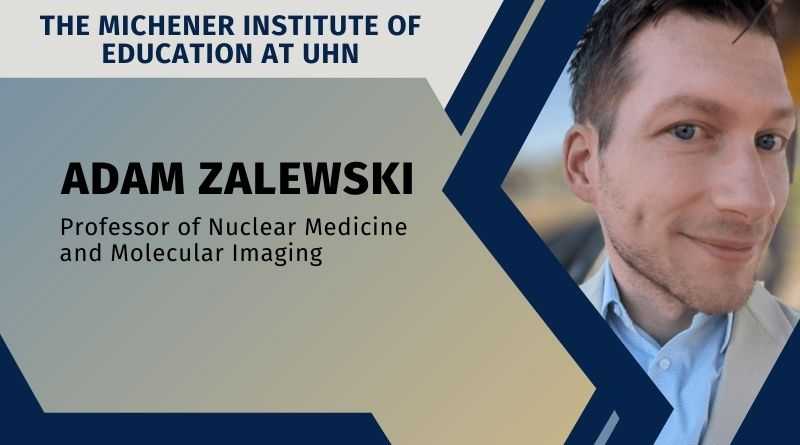
By Adam Zalewski, Professor of Nuclear Medicine and Molecular Imaging, The Michener Institute of Education at UHN
Around the world, the field of nuclear theranostics is exploding. About half of the medical isotopes used to treat head, neck, and cervical cancers in the world are supplied by the province of Ontario. They have just promised to double their production by 2030. The need for medical isotopes is huge – what exactly is happening in the field now and what challenges are there to get health care facilities prepared? There is more to it than simply increasing the amount of radioactive isotopes produced. It is a single component of the intricate puzzle that is providing individualized care. The training of nuclear medicine technicians or technologists is one of those components. These are the healthcare professionals who are responsible for the majority of the handling and often the administration of the radioactive pharmaceuticals to the patients. They are also the ones who are imaging the patients using SPECT/CT or PET/CT cameras. As a critical part of the interdisciplinary team, gaps in the training must be addressed with the exciting advancements of theranostics.
Nuclear medicine is not a new field, with one of the first types of treatments done in the 1940s using Iodine-131 for hyperthyroidism. Theranostics essentially describes the two aspects (therapeutic or diagnostic) in the use of radiopharmaceuticals. Therapy is delivered through charged particles like alpha or beta particles, causing damage to the tissue close to where the isotope labeled material is. Diagnostic information is given by the gamma rays that are emitted from the isotope (or a positron that annihilates to create gamma rays) from inside the body, detected by the SPECT / CT or PET /CT cameras. Nowadays, I-131 treatment is still done in cases involving thyroid cancer using the fact that it emits beta-particles and gamma rays, allowing for both, but ideally, theranostics has different isotopes for the therapy and diagnostics portion, with one of the reasons being to better control the dose given to the patient.
Nuclear theranostics is continuing to advance with many new treatments in clinical research trials across the globe.
The past few years have shown enormous progress in treating a wide variety of cancers with nuclear theranostics. Theranostics relies on the fact that we can target specific tumors with a treatment plan for each patient. Many of these work in a similar manner. For example, Prostate Specific Membrane Antigen (or PSMA) is a protein that is often found in cancer cells. Labeled with Ga-68, a positron emitter, a PSMA ligand will bind to these sites in the body if they exist and give us information about the distribution in the body and help determine if they qualify further for treatment using a beta-emitter such as Lu-177 to destroy cancer cells. This personalized medicine adds an amazing tool in the fight against cancer. There are many such examples of theranostics with the same basic premise.
It’s important to note, though, that this has introduced the need for a highly specialized interprofessional team due to the complexity, as well as a need for advanced equipment and procedures in place in order for it to run successfully.
To be part of the team, a nuclear medicine tech must finish their own specialized program that often ranges from 2-3 years. In those years, there is a clinical component where students must gain proficiency in a number of procedures. Nuclear medicine has traditionally not been focused on therapy – it has been primarily in the diagnostic realm, but theranostics appears to be becoming a necessity. Many programs now have specific, dedicated courses for new students, but they may not have the opportunity to get practical experience due to the fact that not every clinical site offers theranostics. An entire team is necessary, as mentioned, with shortages of all professions involved, including nuclear medicine physicians, as being an issue.
More techs are needed, but the required training in this area is not available everywhere. The equipment needed to do these procedures can be extremely costly as well, with the PET/CT scanner, radioactive material, infusion equipment, and shielding leading to costs of tens to hundreds of thousands of dollars or more for educational institutions to invest in on their own. There is also a concern about working in silos, as many training programs do not sufficiently include other members of the multi-disciplinary team. Since it is relatively new, the ideal protocols are still being investigated, which adds to the challenge of education and training.
The traditional tech programs are considered entry level and there has also been debate as to whether this should be considered advanced practice that requires additional training. There are also a great number of techs who graduated and need to be brought up to speed on these advancements as well. However, as stated earlier, there is a personnel shortage. It is important to remember that if you are adding something to a program, there is less time being spent on other aspects. Some other health care professionals have been considered for filling the needs, including nurses and radiation therapists, neither of which normally handle radioisotopes and present their own concerns.
Nuclear theranostics is continuing to advance with many new treatments in clinical research trials across the globe. There is a dire need for many professions in this emerging market, including nuclear medicine technologists. There are many challenges to being ready for the demand, as there are potential bottlenecks in areas such as isotope creation, training, as well as the creation of the proper procedures and healthcare teams. We need to find solutions to help alleviate these issues. In terms of nuclear medicine techs, finding ways to simulate theranostics workflows when a clinical site is unavailable may be of help, in addition to the addition of curricula in current programs. It is critical we address these issues to better serve our communities.