
What AI Cannot Teach Us About Leadership
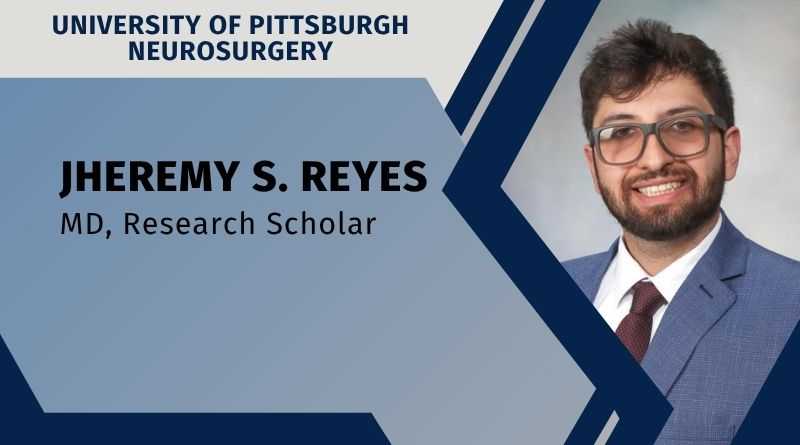
By Jheremy S. Reyes, MD, Research Scholar, University of Pittsburgh Neurosurgery
In an era when machines can learn from data, how do humans learn from greatness?
When I first arrived at UPMC, I thought I was coming to learn techniques. How to read images more precisely, how to understand treatment decisions, how to navigate the technical aspects of neurosurgery. But over time, something shifted. I began to realize that some of the most important lessons in medicine are not written in textbooks. They happen quietly, between patients, in brief comments, or in the way an experienced physician looks at an image and sees not only anatomy, but consequence.
To be in an environment shaped by Dr. L. Dade Lunsford is to feel that history is still alive in the room. His influence is not limited to what has been written, taught, or published. It lives in the standards of care, in the questions people ask, and in the expectation that innovation must always remain connected to patients.
Working with Dr. Constantinos Hadjipanayis and Dr. Ajay Niranjan has taught me that leadership and mentorship are not abstract ideas. They are visible in the way questions are asked, in the way young ideas are taken seriously, and in the way clinical judgment is passed from one generation to the next. In that environment, learning does not always feel structured. Sometimes it feels like simply being present at the right moment, listening carefully, and slowly understanding how experienced minds approach difficult problems.
Leadership in medicine is often described through titles, positions, or achievements. But from what I have seen, real leadership is something different. It is the ability to create space for others to think. It is the willingness to support new ideas while still demanding rigor. It is knowing when to challenge, when to guide, and when to let someone grow through the process. In academic medicine, this kind of leadership can change the direction of a career.
Mentorship is quieter, but just as powerful. It happens in the details. In how uncertainty is handled. In how risks are weighed. In how experience shapes a decision before it is ever explained out loud. A mentor does not only teach facts. A mentor teaches a way of thinking. That kind of learning is difficult to formalize, but easy to recognize when you are fortunate enough to experience it.
The future of medicine will not be built by artificial intelligence alone. It will be built by people who know how to combine technology with judgment, innovation with humility, and ambition with responsibility.
These lessons feel especially important now, as medicine enters the age of artificial intelligence. We often speak about algorithms as tools that can scale knowledge, improve prediction, and support clinical decisions. I believe deeply in that future. The application of computational techniques and artificial intelligence to neurosurgery is a major emphasis of my own work. But the more I work with these technologies, the more I realize that innovation does not begin with machines. It begins with people.
Artificial intelligence can recognize patterns, analyze large datasets, and assist physicians in ways that were difficult to imagine a generation ago. It may help bring advanced expertise to places where it was previously unavailable. It may improve how we predict outcomes, personalize treatment, and understand disease. But it cannot fully reproduce the experience of learning from people who have lived the history of a field. It cannot replace the weight of their judgment, the context behind their decisions, or the quiet lessons that come from watching them think.
What we inherit from leaders and mentors in medicine is not only knowledge. We inherit perspective. We inherit discipline. We inherit a way of approaching complexity without pretending that medicine is simple. We learn that every decision carries consequences, and that behind every image, every plan, and every treatment, there is a patient whose life may be changed by the quality of our judgment.
I have sometimes thought that even an artificial intelligence system would grow tired trying to keep up with everything Dr. Hadjipanayis does in a single day. The comparison is imperfect, of course, but it reveals something important. Machines are powered by energy. Vocation, responsibility, and the belief that medicine is not just a career but also a desire to help, grow, and leave something better for future generations are what drive people like him.
With Dr. Niranjan, I have learned another kind of lesson. He is one of the people I have seen take the most time to search carefully for solutions to other people’s problems. Not because there is always an obvious answer, but because he understands that true expertise requires patience, humility, and attention. In a world that increasingly celebrates speed, that kind of attention has become rare.
This is also what artificial intelligence cannot fully capture. Behind every mentor, there is not only a title, a list of publications, or a career of achievement. There is a person. A friend, a father, a husband, a colleague, someone with doubts, fatigue, joy, humor, and sacrifice. Medicine is shaped by people who feel the weight of what they do. Artificial intelligence can process information, but it does not carry love for the work, loyalty to a team, or compassion for another human being.
In this journey, I have learned not only from senior mentors, but also from colleagues and friends whose brilliance has shaped the way I think. Dr. Alexandros Bouras is one of them. His curiosity, discipline, and ability to build ideas collaboratively have reminded me that innovation is not a solitary act. It is a shared process, sustained by people who are willing to think together, challenge each other, and keep improving the work until it becomes meaningful.
This is why mentorship remains essential, even in an era defined by artificial intelligence. Machines may help us extend knowledge, but people teach us how to use it wisely. Algorithms may support decisions, but mentors show us what responsibility feels like. Technology may accelerate medicine, but leadership gives that progress direction.
For those of us early in our careers, this creates a responsibility. We must learn not only from what our mentors say, but from how they think. We must pay attention to the moments that are not written down. The pauses. The questions. The way they balance optimism with caution. The way they protect patients while still pushing the field forward.
In the end, the future of medicine will not be built by artificial intelligence alone. It will be built by people who know how to combine technology with judgment, innovation with humility, and ambition with responsibility. Perhaps artificial intelligence will help us predict more, calculate faster, and see patterns we once missed. However, it won’t take the place of the quiet privilege of learning alongside those who remind us not just how to practice medicine but also why it is worthwhile in the first place.