
The Proactive Revolution: How Artificial Intelligence and Digital Health Are Redefining Modern Healthcare
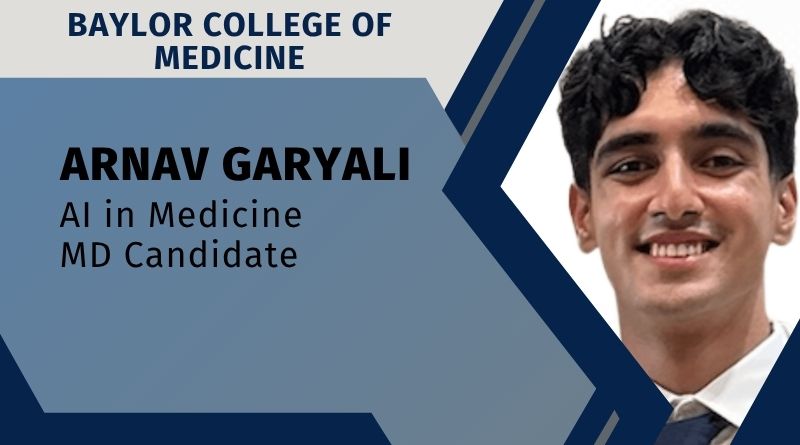
By Arnav Garyali1, AI in Medicine | MD Candidate1 | Baylor College of Medicine
For decades, healthcare has in large part operated on a reactive model. Patients develop symptoms, seek medical attention, receive a diagnosis, and begin treatment. While annual physicals and preventive checkups are sought out to identify health concerns before they progress, access to these appointments is often limited.
Many patients wait months for primary care visits, specialist consultations, or routine screenings. By the time they are evaluated, risk factors may have progressed into chronic disease, with health complications already long into its course by the time care can be delivered. Platforms that deliver continuous health monitoring and personalized guidance between physician visits can help shift healthcare from a reactive model of episodic encounters to a proactive system better equipped to address rising demand, workforce shortages, and ultimately improve patient outcomes.
Artificial intelligence (AI) and digital health technologies are helping create that medium for a solution. The greatest advantage of these innovations may not be their ability to automate healthcare processes, but rather their capacity to shift medicine from reactive treatment to proactive prevention. Through continuous monitoring, predictive analytics, and personalized health recommendations, AI and digital health platforms are enabling patients and providers to identify disease earlier and intervene before complications occur.
The rise of companies such as Function Health and Superpower exemplifies this transformation. Rather than waiting for annual appointments, these platforms allow individuals to monitor extensive biomarker panels, track longitudinal health trends, and receive AI-assisted interpretations of their results. Patients learn more about inflammatory, metabolic, cardiovascular, and hormonal health markers that may point to an increased risk of disease years before symptoms manifest. Instead of asking, “What disease do I have?” healthcare is increasingly becoming focused on answering, “What disease am I likely to develop, and how can I prevent it?”
The greatest promise of AI and Digital Health is not simply making healthcare more efficient.
This shift is particularly important in the management of chronic diseases, which account for a large segment of healthcare spending in the United States. In diabetes, persistent elevations in blood glucose can lead to microangiopathic complications affecting the kidneys, retina, nerves, and cardiovascular system. Unfortunately, many of these complications are irreversible once significant damage has occurred.
Digital health technologies create opportunities for earlier intervention. AI-driven risk prediction models, wearable sensors, smart blood pressure cuffs, and continuous glucose monitors can all identify minute physiological changes long before a patient has overt illness. Providers can actively recommend lifestyle modifications, medications, or specialist referrals before irreversible damage occurs. Preventing diabetic nephropathy is far more effective than treating end-stage renal disease. Preventing heart failure is preferable to managing repeated hospitalizations. The value of AI lies not only in treatment optimization but in disease prevention itself.
Recent healthcare companies have become a major catalyst for this movement. Y Combinator-backed companies such as Nori Health and Prana Health are developing innovative approaches to chronic disease management and personalized health optimization. These companies reflect a broader trend toward healthcare that extends beyond the walls of hospitals and clinics. Patients are increasingly able to engage with their health data in real time, creating opportunities for earlier intervention and more personalized care.
At the same time, AI-powered healthcare tools are becoming valuable assets for physicians and health systems. One notable example is Galen AI, a healthcare AI company recently acquired by Oura. The acquisition reflects a growing convergence between wearable technology, health monitoring, and artificial intelligence. Rather than operating as isolated tools, future digital health platforms may function as integrated ecosystems that continuously collect health information and provide actionable insights to both patients and providers.
Importantly, these technologies are not designed to replace physicians. Instead, they serve as force multipliers that augment clinical decision-making. Healthcare providers face increasing administrative burdens, expanding patient panels, and growing documentation requirements. AI can help identify high-risk patients, summarize clinical information, flag concerning trends, and assist providers in prioritizing care. This allows physicians to spend less time navigating data and more time focusing on patient relationships and medical decision-making.
The integration of AI into hospital systems may represent one of the most significant opportunities for healthcare improvement. Predictive algorithms can identify patients at risk for clinical deterioration before obvious symptoms emerge. Remote patient monitoring programs can track patients with chronic diseases after discharge and alert care teams when intervention is needed. AI-driven triage systems can help prioritize patients based on clinical risk rather than arrival time alone. Collectively, these tools synergistically improve efficiency while also maintaining high-quality care.
The implications for hospital capacity are substantial. Across the country, healthcare systems frequently struggle with overcrowding, staffing shortages, and limited bed availability. Many hospital admissions result from preventable exacerbations of chronic disease. If AI and digital health technologies can identify deterioration earlier and support intervention in outpatient settings, fewer patients may require hospitalization. This not only improves patient outcomes but also preserves valuable hospital resources for patients requiring acute care.
Looking ahead, the future of healthcare will likely be built around a partnership between clinicians, patients, and intelligent technologies. Leading academic medical centers are already investing heavily in this future. Institutions such as Stanford Medicine, UCSF, and other innovation-focused healthcare organizations recognize that the next era of medicine will be defined not only by new drugs or procedures but also by data-driven prevention. AI systems will continuously analyze health data, digital health platforms will facilitate early intervention, and physicians will leverage these insights to deliver more personalized care. Hospital systems may evolve from centers primarily focused on treating illness to organizations that actively monitor and preserve health long before disease reaches an advanced stage.
The transition will require thoughtful implementation, strong privacy protections, and equitable access to technology. However, the direction of healthcare is becoming increasingly clear. The greatest promise of AI and digital health is not simply making healthcare more efficient. It is developing a system that can detect danger earlier, stop disease progression, cut down on avoidable hospital stays, and enhance population-wide health outcomes.
By embedding these technologies into both everyday life and healthcare institutions, medicine can finally move beyond reacting to illness and toward proactively protecting health.