
Built Together, Used Daily
How Cross-Functional Partnership Made ED Forecasting Stick
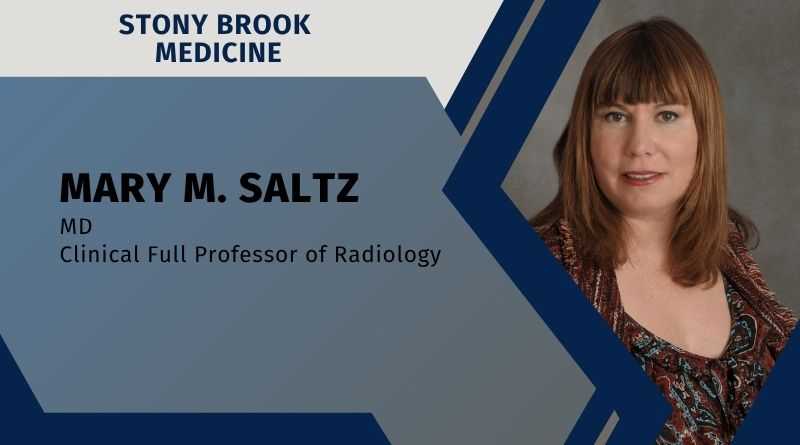
By Mary M. Saltz, MD, Clinical Full Professor of Radiology, Stony Brook Medicine
An informatics project without a sponsor dies on the vine. In health systems, even the most elegant analytics can stall if no leader is willing to champion it, integrate it into daily operations, and hold the organization accountable for using it. One recent operational informatics effort at Stony Brook is a good example of what happens when that sponsorship is real: the work moved beyond interesting modeling and became part of the daily workflow, improving staffing decisions in the emergency department (ED) and helping reduce ED boarding.1
When intuition isn’t enough
Every hospital lives with the same daily uncertainty: how many patients will arrive in the ED tomorrow?
Most EDs have experienced clinicians and managers with excellent instincts, and many teams try to predict next-day volume based on experience, recent patterns, and instinct. The problem is that the people with the best intuition aren’t always on shift, and even strong intuition can miss sudden changes in demand. When volume exceeds expectations, staffing can lag behind reality, leading to longer waits, increased crowding, and downstream congestion.
This matters far beyond the ED itself. A significant proportion of ED patients are admitted to the hospital. When inpatient beds are unavailable, those patients remain in the ED as boarders. Boarding ties up treatment spaces and staff, slows throughput, and amplifies crowding, creating a feedback loop that degrades the patient experience and strains teams across the hospital.
ED volume drives hospital flow
Hospital bed availability is ultimately constrained by three forces: staffing, the number of beds, the number of patients coming in, and the number of patients leaving.
The patients leaving side of the equation is the discharge process often complex, multidisciplinary, and vulnerable to delays. Many institutions have major opportunities there. But in this project, our group focused on a different leverage point: improving the hospital’s ability to anticipate demand and match staffing to expected ED volume, with the downstream goal of reducing boarding time and improving throughput.
Health IT success is often incremental, not because ambition is lacking, but because operational change is hard.
Building a better forecast from what hospitals already know
If you step back, it’s obvious that many variables can influence ED arrivals: day-of-week seasonality, holidays, weather, outbreaks, major local or national events, and countless community-level factors. But in practice, one of the strongest signals is past behavior, historical arrival patterns, captured reliably in operational data.
Our team used several years of ED daily volumes to build a forecasting model. We trained and tested the approach carefully using prior days’ ED counts, validating performance on held-out data rather than on the same data used to build the model. We expected improvement over ad hoc estimates, but what mattered most wasn’t the academic performance of the model. What mattered was whether it could consistently outperform human prediction in real operations and be delivered in a way that leaders could trust and use.
The pivotal workflow shift
Executive sponsorship took a prediction and made it real. Instead of leaving the forecast sitting as an isolated analytics output, the team routed it directly to a key clinical leader: the Chief Medical Officer (CMO), who already joined daily Emergency Department (ED) huddles.
As the model’s accuracy improved over time, the CMO started actively referencing the forecast during those huddles, turning it into a real-time decision-support tool that shaped staffing discussions on the spot.
The real breakthrough came when the forecast was brought into the daily ED huddle. Instead of sitting unused in a report or dashboard, it became a regular input for leadership in the meeting where operational calls are actually made. That’s the point at which analytics starts affecting care delivery.
Results: better than humans, used every day
We will share technical specifics elsewhere, training/test splits, modeling choices, and evaluation metrics. But the bottom line is straightforward: the model performed significantly better than human predictions and has been adopted into daily use at Stony Brook to support ED nursing staffing decisions.
The intent is not to replace clinical judgment, but to augment it, providing a reliable, data driven signal when intuition is unavailable, variable, or overwhelmed by competing demands.
A small step with big operational impact
This project is only one piece of the broader hospital flow puzzle. Improving throughput and reducing ED boarding ultimately requires attention to both sides of the bed-availability equation: demand coming in and patients moving out via efficient discharge processes. We did not tackle discharge optimization in this effort.
Instead, we targeted a practical operational aim: ensure staffing is sufficient to meet anticipated ED volume, with the expected downstream effect of decreasing ED boarding time and improving ED throughput.
That framing is important. Health IT success is often incremental, not because ambition is lacking, but because operational change is hard. The best projects identify a tractable problem, deliver something trustworthy, embed it into the workflow, and show impact. Then they become a foundation for the next step.
The lesson for Health IT leaders
Forecasting ED arrivals is a technical challenge. Making the forecast matter is an organizational one.
This work succeeded because the team partnered with operational leadership early, delivered results in a format aligned to how decisions are made, and had an executive sponsor willing to bring it into daily practice. That is the real recipe: data science plus workflow plus sponsorship.
In the end, the project illustrates a core truth: the purpose of predictive modeling in healthcare isn’t prediction, it’s better decisions. And with the right sponsorship, even a single operational forecast can become a durable, daily tool that improves patient flow and supports the teams doing the work on the ground.
1. Ung L, Kurc T, Lingam V, Saltz J, Saltz M, Heslin S, Morley E. Predicting Patients Boarding in the Emergency Department using Open-source Time Series Forecasting Libraries. Oral presentation (session: “Predictive Analytics for Safer Care”), AMIA Clinical Informatics Conference (CIC); May 22, 2024; Minneapolis, MN.