
AI in Lung Imaging – a Low Hanging Fruit?
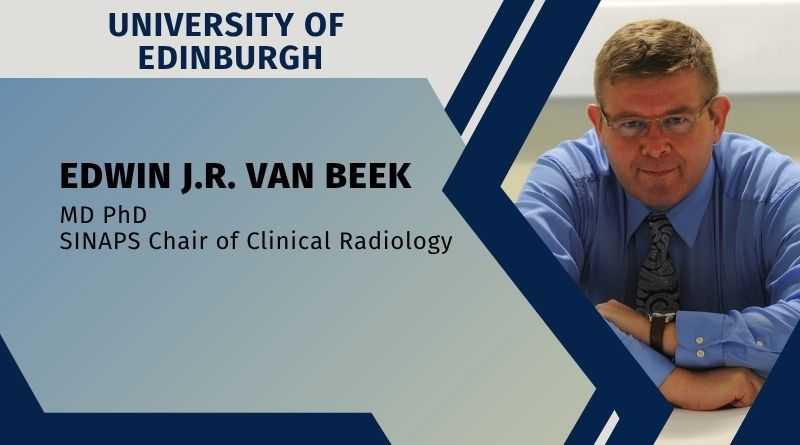
By Edwin J.R. van Beek MD PhD | SINAPS Chair of Clinical Radiology, University of Edinburgh
Introduction
The utilization of AI tools is taking flight across multiple domains and has been hailed as the saviour of Radiology in particular. This is, to a large extent, due to the fact that images lend themselves to computer analysis well, and with sufficient computing power, this can generate information that would possibly remain hidden if using eyes alone. This, in combination with the strains of the workforce, makes the AI application of particular interest to the wider community.
Background
Most patients entering any medical environment will undergo imaging, and chest radiographs are an essential component of the workup, together with laboratory/blood tests and electrocardiograms. This means that a huge number of chest radiographs will require reporting, with the vast majority of these showing normal results. Nevertheless, this also means that radiology workloads are overburdened, leading to delays in reporting, with some centers having backlogs of days to weeks.
It is extremely likely that AI tools will enter clinical practice within the next few years and that they will positively impact workflow, reporting turn around times and patient management.
Development of computer assisted diagnosis
Computer tools have been developed in a relatively simplistic manner in the first instance, such as the identification of potentially significant lung nodules, which could represent cancer. Some of these computer aided diagnostic tools have been around for decades now, and have made inroads into clinical settings with some success. However, chest radiographs are complex and require expertise and knowledge to enable interpretation of a 3D structure into a 2D image in conjunction with the patient characteristics and clinical symptoms.
From CAD to AI
More recently, novel machine learning (ML) based tools have been developed that are able to provide more comprehensive information based on image analysis, with particular emphasis on establishing normal results versus the 10 most common abnormalities.
The current status of these tools makes a very compelling case for the wider introduction into clinical practice, but they may still require a final step of clinical verification before this can be achieved. However, some initial success has become available over the past few years.
A tool to detect tuberculosis in poorly accessible or underdeveloped regions has enabled the more rapid reporting of this important transmissible disease. This has been achieved by direct reporting of chest radiographs by AI, supporting the less experienced and less available radiologist resources. Thus, with limited training of technical personnel, a diagnosis can now be offered on site, rather than for images to be sent or transported to a central hub for reporting, meaning a more rapid and accurate management of such patients.
AI in clinical practice
It is very unlikely that AI will take over the role of trained and experienced physicians in the reporting of chest radiographs. However, there is clearly a role to support the workflow and accurate more rapid reporting of so many investigations.
One proposed pathway would be that AI reads all studies and selects out those that are clearly normal. These would be automatically reported without further intervention, although auditing would take place in random samples to ensure this remains accurate. Those studies that are difficult or abnormal can then be read by radiologists to make a final report and diagnosis.
Another pathway would be similar to AI reads on all studies, and making this available to the referring physician before sending it to the radiologist. This would enable a more rapid identification of clearly normal or clearly abnormal findings at the bedside, while still retaining the expert advice of the radiologist to correct matters. The risk with this approach is that inadvertent identification of abnormalities could result in inappropriate treatment of patients, and therefore, this approach has been rejected by many as a viable alternative.
AI in clinical practice – what next?
It is extremely likely that AI tools will enter clinical practice within the next few years and that they will positively impact workflow, reporting turn around times and patient management. All indications are that the AI tools currently available will reach their potential.
The only thing still standing in their way is clinical validation, which requires properly designed clinical research studies, to make sure that the promise is realised.
The costs of AI tools will need to be set against the general costs of healthcare, impact on patient management and ultimately the costs of more appropriate treatment with short and long-term benefits of patient outcomes. It would appear that in this light, it makes economic sense to ensure AI tools are properly costed and refunded in due course.
BIOGRAPHICAL PROFILE OF AUTHOR:
Professor Edwin van Beek graduated from Erasmus Medical School, Rotterdam, NL in 1987. His subsequent career saw him work in the UK, Amsterdam (PhD and Radiology speciality training), and then back in the UK (University of Sheffield – MEd). He established a successful chest MRI programme, studied PET imaging at King’s College London to help establish PET imaging in Sheffield in 2000, and was involved in pulmonary hypertension and lung cancer groups with a focus on implementing MRI and CT for pulmonary vascular disease.
In 2004 he took up the position of professor of Radiology, Medicine and Biomedical Engineering at the University of Iowa (USA), where he developed a clinical service for Cardiac CT Angiography, worked on CT based methods for identification and quantification of lung diseases and established hyperpolarized gas lung MRI. He obtained his full medical license in Iowa during this time.
In 2009 he took up his current post, with an emphasis on quantitative imaging in cardiovascular, chest and PET imaging. His focus is on incorporating quantification of disease with both morphology and functional assessment.
He is on ESR European Imaging Biomarkers Alliance board, and has a similar role for National Cancer Research Institute (UK) and RSNA Quantitative Imaging Biomarkers Allicance (USA). He has been particularly involved in cardiac multimodality research programmes and most recently on development in lung imaging (including lung cancer screening for Scotland).
During his nearly 20 years of membership of ISMRM, he served on a number committees and has actively engaged in this community. He was secretary and chairman of the Hyperpolarized Study Group, was a member of the Annual Programme Planning Committee and the Educational Committee, has served on the editorial board of JMRI (as deputy editor for more than 12 years) and organised a meeting on Value of MRI in Edinburgh. He has provided multiple invited lectures during ISMRM meetings on the topic of lung MRI and value based MR imaging.
He prides himself in being part of a multidisciplinary research field, published extensively and has more than 530 peer reviewed articles, 650 abstracts, 3 books and more than 50 book chapters. He has been active in numerous multidisciplinary research groups (EU, USA, UK) and he served on the editorial boards of World J of Radiology, ISRN and International Journal of Radiology. He is a reviewer for many prestigious journals, including Radiology, JMRI and other clinical journals. He is an active member of ESR, ESTI, ESCR (having served on various committees) and was President of the 7th International Workshop for Pulmonary Functional Imaging in Edinburgh in 2015 and Chairman for the 10th workshop in Hannover, Germany in 2022.
He is a fellow of the Royal College of Radiologists and the Royal College of Physicians of Edinburgh, a member of the Radiological Society of North America and an honorary member of the Hellenic Radiological Society.
He was elected a member of the Fleischner Society in 2015. He was awarded the Fellowship by ISMRM in 2019 and obtained his European Diploma in Cardiovascular Radiology in 2019. He is the recipient of the John West medal for life-time contributions to the field of functional thoracic imaging (2022).