
Multimodal Imaging in Retinal Disease: Advancing Diagnosis and Management
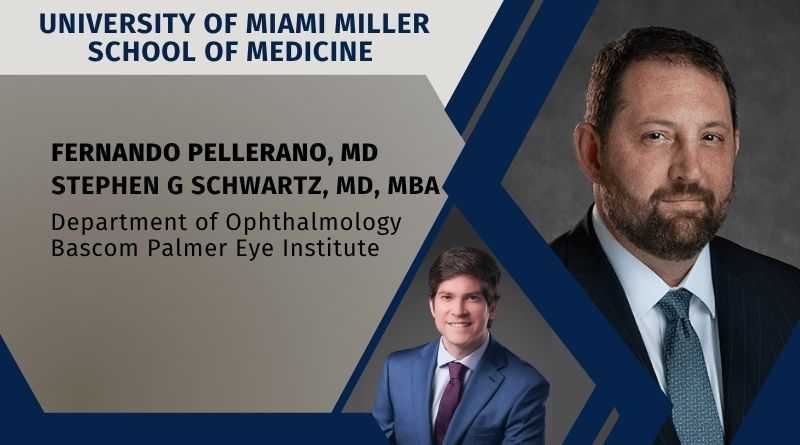
By Fernando Pellerano MD, Stephen G Schwartz MD, MBA, Department of Ophthalmology, Bascom Palmer Eye Institute, University of Miami Miller School of Medicine, Miami, FL
Introduction
Over the past three decades, retinal imaging has evolved to advanced multimodal techniques that provide unprecedented clinical information. Although the volume of data can be substantial, the integrated use of these technologies has significantly improved our ability to diagnose, monitor, and treat retinal diseases, including age-related macular degeneration and diabetic retinopathy.1
Core Imaging Modalities
Traditional fundus photography allows imaging of the posterior pole of the eye. This is generally thought of as a “surface” view. However, the normal human retina is essentially transparent and very thin (less than half a millimeter), so deeper structures, including the underlying choroidal blood vessels, are readily imaged. Widefield (posterior to the vortex veins) and ultrawidefield (anterior to the vortex veins) imaging enable visualization of more than 80% of the retina in a single image, often without the need for pupil dilation. 2,3 Fundus photography can be supplemented by various techniques, including fundus autofluorescence, fluorescein angiography, and indocyanine green angiography.
The main strength of multimodal imaging lies in its complementary nature
Fundus autofluorescence highlights the distribution of a natural pigment called lipofuscin within the retina and related structures, which often demonstrates abnormalities not imaged by standard photography.4-6 Fluorescein angiography uses the intravenous injection of a dye called fluorescein to demonstrate blood flow through the arteries, capillaries, and veins of the retina. An alternative dye called indocyanine green (ICG) is less frequently used but can provide better imaging of blood flow through the deeper choroidal vessels. Both fluorescein and ICG require intravenous injection, which is associated with small risks of nausea, vomiting, or allergic reactions.
Optical coherence tomography (OCT) provides cross-sectional images of the retina, which is complementary to the more “surface” view provided by fundus photography. In addition, OCT allows quantitative measures of retinal thickness, which are useful to monitor disease progression and response to therapy.7,8 OCT angiography allows some non-invasive imaging of blood flow through retinal and choroidal vessels without intravenous dye injection. 2,9
Ultrasound is another complementary imaging tool. Ultrasound cannot provide the level of detail seen by photography and OCT, but can provide clinically useful information in patients with media opacities (dense cataract, vitreous hemorrhage) that interfere with other testing. Ultrasound is also very helpful in measuring the thickness of tumors inside the eye.

FIGURE
Legend: Multimodal imaging of a normal left eye.
A. Ultrawidefield fundus imaging
B. Fundus autofluorescence
C. Fluorescein angiography
D. Indocyanine green angiography
E. Optical coherence tomography
Clinical Applications
Age-related macular degeneration is the leading cause of irreversible visual loss among the elderly in the US and other high-income nations. “Wet” (neovascular or exudative) macular degeneration is characterized by the development of abnormal new blood vessels, usually arising from the choroid. “Dry” (non-neovascular or nonexudative) macular degeneration lacks new blood vessels but may progress to an advanced form called geographic atrophy. In current practice, OCT is the primary imaging modality that can, in most patients, distinguish “dry” from “wet” findings.8,10 Fundus photography and especially fundus autofluorescence are very helpful to identify geographic atrophy. OCT angiography and, less commonly, fluorescein or ICG angiography may be used to identify subtle findings of “wet” macular degeneration.10-12
Diabetic retinopathy is a major cause of worldwide visual loss. In current practice, OCT is the primary imaging modality that can identify diabetic macular edema, which is an important cause of visual loss in patients with diabetes. Some patients develop proliferative diabetic retinopathy, in which abnormal new blood vessels may develop on the retinal surface. These abnormal new vessels may be identified by fundus photography or, in some cases, OCT angiography or, less commonly, fluorescein angiography.3,13 In patients with dense vitreous hemorrhage due to proliferative diabetic retinopathy, ultrasound allows rapid identification of patients with associated retinal detachment.
Similar to diabetic retinopathy, multimodal imaging is helpful in patients with other common retinal vascular diseases, including retinal artery occlusion or retinal vein occlusion. Generally, OCT is the primary imaging modality to detect macular edema that is generally associated with retinal vein occlusion. Fundus photography, OCT angiography, and, less commonly, fluorescein angiography may be used to identify new blood vessel formation on the retinal surface. 14
Multimodal imaging is also helpful in patients with less common retinal diseases, including intraocular tumors, inherited retinal diseases, inflammatory diseases (uveitis), and others.
Summary
The main strength of multimodal imaging lies in its complementary nature.1 Fundus photography and autofluorescence provide a detailed “surface” view. OCT allows a detailed cross-sectional image with a quantitative measure of retinal thickness. Although intravenous injection has risks, fluorescein and ICG angiography make it possible to see blood flow through retinal and choroidal blood vessels. OCT angiography can provide some visualization of retinal blood flow without injection risks.1,6,9 Together, multimodal imaging modalities offer a comprehensive evaluation that surpasses any single imaging study.
References
- Fogel-Levin M, Sadda SR, Rosenfeld PJ, Waheed NK, Querques G, Freund KB, et al. Advanced retinal imaging and applications for clinical practice: a consensus review. Surv Ophthalmol. 2022 Sep-Oct;67(5):1373-90.
- Jampol LM, Glassman AR, Sun J. Evaluation and care of patients with diabetic retinopathy. N Engl J Med. 2020;382(17):1629-37.
- Schreur V, Larsen MB, Sobrin L, Wintergerst MWM, Chhablani J, Egan C, et al. Imaging diabetic retinal disease: clinical imaging requirements. Acta Ophthalmol. 2022;100(7):752-62.
- Pichi F, Abboud EB, Ghazi NG, Khan AO. Fundus autofluorescence imaging in hereditary retinal diseases. Acta Ophthalmol. 2018;96(5):e549-e61.
- Schmitz-Valckenberg S, Holz FG, Bird AC, Spaide RF. Fundus autofluorescence imaging: review and perspectives. Retina. 2008;28(3):385-409.
- Schmitz-Valckenberg S, Pfau M, Fleckenstein M, Staurenghi G, Sparrow JR, Bindewald-Wittich A, et al. Fundus autofluorescence imaging. Prog Retin Eye Res. 2021;81:100893.
- Apte RS. Age-related macular degeneration. N Engl J Med. 2021;385(6):539-47.
- Guymer RH, Campbell TG. Age-related macular degeneration. Lancet. 2023;401(10386):1459-72.
- Viggiano P, Boscia G, Sadeghi E, Borrelli E, Sacconi R, Querques L, et al. Pachychoroid disease spectrum: how multimodal imaging and OCT angiography have improved our knowledge. Prog Retin Eye Res. 2025;107:101372.
- Guymer R, Wu Z. Age-related macular degeneration (AMD): more than meets the eye. The role of multimodal imaging in today’s management of AMD-a review. Clin Exp Ophthalmol. 2020;48(7):983-95.
- Holz FG, Sadda SR, Staurenghi G, Lindner M, Bird AC, Blodi BA, et al. Imaging protocols in clinical studies in advanced age-related macular degeneration: recommendations from classification of atrophy consensus meetings. Ophthalmology. 2017;124(4):464-78.
- Sayegh RG, Simader C, Scheschy U, Montuoro A, Kiss C, Sacu S, et al. A systematic comparison of spectral-domain optical coherence tomography and fundus autofluorescence in patients with geographic atrophy. Ophthalmology. 2011;118(9):1844-51.
- Parravano M, Cennamo G, Di Antonio L, Sacconi R, Bandello F, Querques G. Multimodal imaging in diabetic retinopathy and macular edema: an update about biomarkers. Surv Ophthalmol. 2024 Nov-Dec;69(6):893-904.
- Häner NU, Dysli C, Munk MR. Imaging in retinal vascular disease: a review. Clin Exp Ophthalmol. 2023;51(3):217-28.