
Opioid Prescription and Challenges
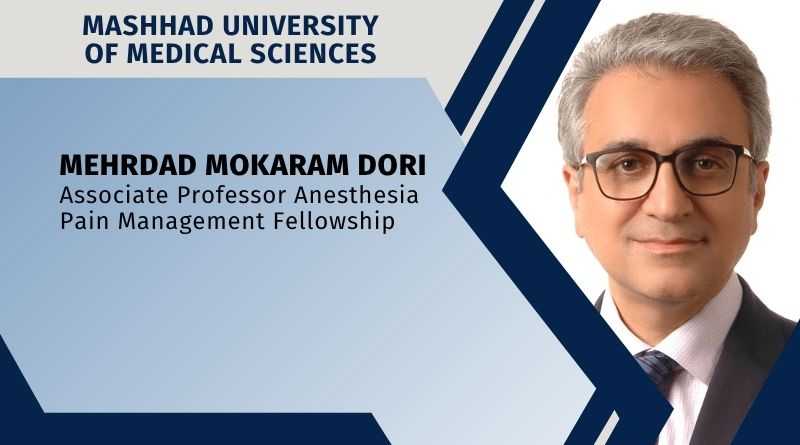
By Mehrdad Mokaram Dori, Associate Professor Anesthesia |Pain Management Fellowship, Mashhad University of Medical Sciences
Opium is an ancient drug that has a history as long as hunting and gathering tribes around the world. Prehistoric therapists were familiar with the magic derivate effects of the opium plant on relieving pain and experiencing euphoria. Also, ancient medicine was aware of the toxic effects of opium and its respiratory depression, so it was being employed for suicide commitment to end up a painless unconscious death.
Nowadays, opioids are the main drugs in perioperative pain management and critical care units as they can strongly block pain action potentials in the posterior horn of the spinal cord and suppress central input of the pain. Therefore, Opioids prevent unleashed constant release of pain massages to the brain, which can end up to serious events like stress response and central sensitization. Stress response is a lifesaving activation of the hypothalamus-hypophisis-adrenal axis in an emergent situation like acute bleeding, but the brain may perceive constant severe pain as stress and so the axis would be aberrantly activated. Consequently, all hormones of the axis will be released into the blood, leading to disastrous consequences for patients, especially in the perioperative period or in the intensive care units. Central sensitization is the another threat of acute pain mismanagement when the central nervous system facilitates the transmission of pain signals in response to an uncontrolled current of pain action potentials to the posterior horn of the spinal cord, so sensitization of the brain may happen and an acute pain can turn into a chronic one. Fortunately, opioids with their strong effects on pain management have a crucial role in preventing these serious consequences of severe pain.
Opioids are strong pain killers and main stem of pain control in specific situations like critical care or perioperative period, but they have many serious side effects in long-term consumption, so they should be regarded as hospital drugs except for very rare indications.
But there are many drawbacks to opioids consumption. First, tolerance effect may occur as with chronic use; patients have to raise their opioid consumption doses to receive the same previous effect. Second, opioids do not have a ceiling effect means that as tolerance occurs, no serious complication or side effects may stop higher consumption doses. Therefore, opioid doses for a tolerant patient may rise to an unimaginable high dose that could be fatal for a non-tolerant person. Tolerance launches other challenges for the healthcare providers when they have to prescribe opioids for an opioid tolerant patient in serious conditions, like the perioperative period or ICU admission. In this situation, physicians have to gradually increase the opioid doses until sufficient clinical pain relief is obtained. Third, Hyperalgesia may occur with opioid consumption, which indicates a decrease in the sensory threshold of the pain nociceptors, so opioid consumers would be more susceptible to pain stimulators and feel the pain more than other patients, which is completely opposite to the main purpose of opioid prescription. Also, cell-mediated immunity may be impaired during chronic opioid consumption. Subsequently, opioid consumers will be more susceptible to serious infections and cancers. Finally, opioids are not very effective drugs in neuropathic pain and with additional Hyperalgesia, opioids may even augment pain perception, so restricting opioids prescription is a reasonable policy for most patients involved with neuropathic pain.
The terms opioid tolerant, abuser, or addiction refer to the different clinical situations. In some uncommon situations, like the terminal phase of a cancer, opioids may be prescribed for palliation, so the patient with a medical indication should be recognized as an “opioid tolerant “patient who may need increasing opioid doses during their short life span. Abuser refers to the illegal opioid consumption without a medical indication. When opioid abusing accompanied by a psychological dependency on the drug, it is called addiction.
Different classes of opioids have their own complications, as well as interactions with other drugs. For example, the phenylpiperidine family of synthetic opioids in a patient with a heart conduction disorder may cause severe morbid arrhythmia. Also, co-administration of some common antipsychotic drugs like selective serotonin reuptake inhibitors (SSRI) with phenylpiperidine family of opioids may end up to fatal arrhythmia or another morbid complication named serotonin syndrome. Recent debates and challenges about illegal Fentanyl transportation and abusing were crucial, as Fentanyl belongs to the phenylpiperidine family of opioids. Moreover, like other potent opioids, Fentanyl can easily cause fatal respiratory depression.
In conclusion, opioids are strong pain killers and main stem of pain control in specific situations like critical care or perioperative period, but they have many serious side effects in long-term consumption, so they should be regarded as hospital drugs except for very rare indications.
References:
1- Charles V. Preuss 1, Arun Kalava 1, Kevin C. King 2In: StatPearls [Internet]. Treasure Island (FL): StatPearls Publishing; 2025 Jan.2025 Jul 6.mption and overall opioids should be considered as just hospital drugs unless for rare indications.
2- Aziza Alenezi 1, Vibhu Paudyal, Exploring Pain Clinical Specialists’ Perspectives on Opioid Optimization for Chronic Non-Malignant Pain in EnglandJ Pain Res. 2025 Aug 13;18:4037–4051. doi: 10.2147/JPR.S512418
3- Yuancheng Zhou 1, Wenyu Li, Research progress on the impact of opioids on the tumor immune microenvironment (Review), Mol Clin Oncol ,2025 Apr 15;22(6):53. doi: 10.3892/mco.2025.2848. eCollection 2025 Jun.