
Artificial Intelligence in Infection Prevention: Transforming Healthcare Surveillance, Early Detection, and Patient Safety
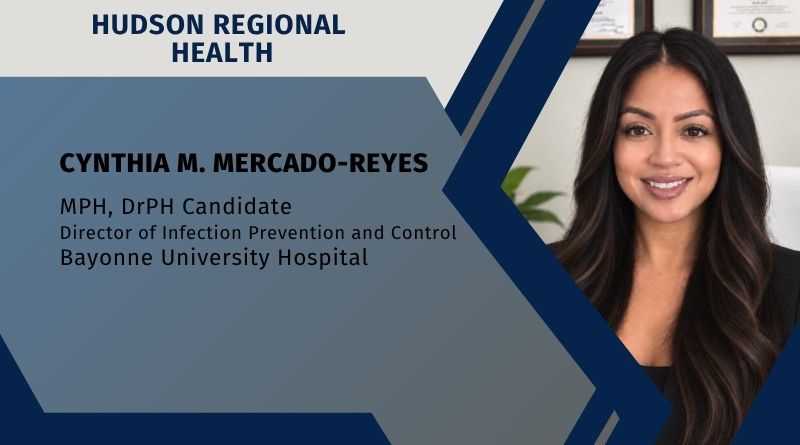
By Cynthia M. Mercado-Reyes, MPH, DrPH Candidate Director of Infection Prevention and Control, Bayonne University Hospital | Hudson Regional Health
Healthcare generates enormous amounts of clinical information every day. For infection prevention professionals, laboratory results, microbiology reports, antimicrobial use, device utilization, clinical documentation, and infection trends can provide important signals about risks to patient safety.
The challenge is no longer simply having access to data; it is determining how quickly we can turn that data into meaningful action.
Artificial Intelligence (AI) offers an opportunity to transform this process. When thoughtfully integrated into healthcare systems, AI can analyze large amounts of information, identify patterns, prioritize risks, and bring concerns to healthcare teams earlier. Its role should not be to replace human expertise, but to strengthen the ability of infection prevention professionals to protect patients.
From Surveillance to Earlier Detection
Throughout my work in infection prevention, I have seen how quickly an unusual laboratory result, microbiology finding, or change in an infection trend can shift our priorities. Surveillance is at the heart of infection prevention. We continuously review information to identify healthcare-associated infections (HAIs), recognize potential transmission, investigate trends, and determine where interventions may be necessary.
Even with electronic surveillance systems, infection prevention professionals must interpret information from multiple sources. AI can make this process more efficient by analyzing multiple data points simultaneously and identifying patterns that deserve attention.
Imagine beginning the day with numerous microbiology results, antibiotic orders, device days, and clinical alerts. An AI-supported surveillance system could prioritize cases based on unusual patterns or combinations of risk factors. The infection preventionist would still investigate and make the final determination, but technology could identify where attention is needed first.
This could be particularly valuable when monitoring central line-associated bloodstream infections, catheter-associated urinary tract infections, Clostridioides difficile infections, and surgical site infections.
AI can help us recognize patterns faster, prioritize information, and identify risks earlier. But infection prevention remains fundamentally human. It requires judgment, collaboration, leadership, and action.
Turning Data Into Patient-Safety Action
The value of AI is not simply its ability to process information quickly. Its greater potential is helping healthcare professionals recognize meaningful relationships within data and translate them into earlier action.
AI-supported analytics could identify changes in infection patterns, unusual microbiology trends, or patients at increased risk. Early detection may enable infection prevention teams to work with frontline personnel, conduct investigations more quickly, and assess whether further actions are required.
Surveillance has historically helped us understand what has already happened. Emerging technologies may increasingly help us identify what could be developing.
For infection prevention professionals, this could mean spending less time searching for information and more time doing what technology cannot do: investigating, educating, collaborating, communicating, and leading prevention efforts.
AI Is a Tool, Not a Replacement
As healthcare organizations embrace AI, we must maintain realistic expectations. An algorithm may identify an unusual pattern, but it cannot understand every clinical circumstance surrounding a patient. Infection prevention requires epidemiological reasoning, clinical knowledge, observation, communication, and interpretation of surveillance definitions.
Technology may tell us where to look. Human expertise determines what the information means.
AI-generated alerts should support professional decision-making rather than replace it. Infection preventionists must remain involved in validating information, investigating potential transmission, and determining appropriate interventions.
Recognizing the Challenges
AI also introduces challenges, including patient privacy, cybersecurity, data quality, algorithmic bias, false alerts, costs, and integration with clinical workflows. Poor-quality data can produce unreliable results, while excessive alerts can contribute to alert fatigue.
Professionals in infection prevention ought to be involved in the selection and assessment of technologies intended to facilitate surveillance. Those closest to the work can help determine whether technology truly improves the process and contributes to safer patient care.
Leadership and Collaboration Remain Essential
Technology alone does not transform healthcare. Sustainable improvement requires leadership, collaboration, accountability, and a culture that prioritizes patient safety.
At Hudson Regional Health, that commitment is supported by the vision of Yan Moshe, Chairman of the Board, and Nizar Kifaieh, M.D., MBA, CPE, FACEP, President and Chief Executive Officer. Their system-level leadership and commitment to innovation and advancing healthcare services help create an environment where emerging technologies can support quality and patient safety.
At Bayonne University Hospital, this vision is carried forward through multidisciplinary leadership. I am grateful for the leadership and support of Vijayant Singh, M.D., MBA, FACHE, CPE, Chief Hospital Executive; Anna Coviello, MSN, RN, CNO/VP of Patient Care Services; Mohammed Zubair, M.D., Chief Medical Officer; Jack Boghossian, M.D., Chairman of Infection Control; and Patricia Awuah, MSN, RN-BC, Quality Director.
Their collective commitment reinforces an important lesson: technology is most effective when paired with visionary leadership, clinical expertise, and frontline knowledge.
Looking Ahead
Artificial intelligence will continue to evolve, and infection prevention will evolve with it. Predictive surveillance, advanced analytics, automated risk identification, and earlier outbreak detection may increasingly become part of how healthcare organizations protect patients.
Every innovation should ultimately answer one fundamental question:
Does this help us provide safer care?
The future of infection prevention will not be defined by AI replacing people. It will be defined by how effectively we combine technology with human expertise.
AI can help us recognize patterns faster, prioritize information, and identify risks earlier. But infection prevention remains fundamentally human. It requires judgment, collaboration, leadership, and action.
When technology and infection prevention professionals work together, we have an opportunity not simply to respond to infections more efficiently, but to identify risks earlier and prevent harm before it occurs.
About the Author
Cynthia M. Mercado-Reyes, MPH, DrPH Candidate, is a nurse and healthcare leader who serves as Director of Infection Prevention and Control at Bayonne University Hospital, part of Hudson Regional Health. Under her infection prevention leadership, the hospital achieved two consecutive years, 2024 and 2025, with zero HAIs across key surveillance categories. She holds a Master of Public Health and is nearing completion of her Doctor of Public Health (DrPH) degree, with professional expertise in infection prevention, infectious disease prevention, patient safety, and healthcare quality.