
Innovation From the Control Room: How Frontline Perspective Strengthens Technology Adoption in the IR Suite
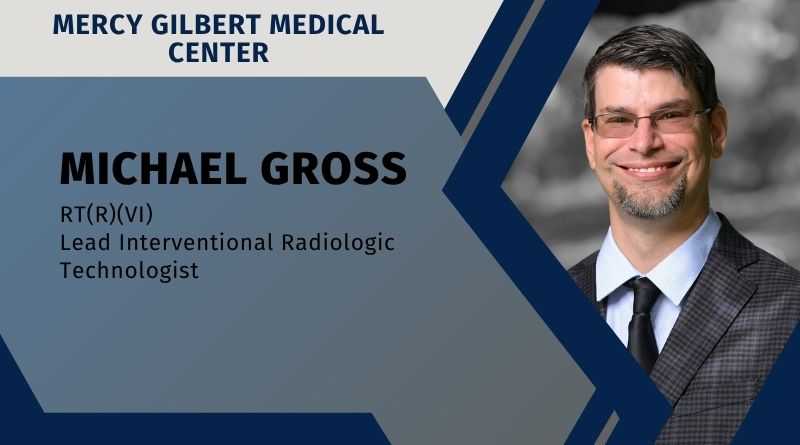
By Michael Gross, RT(R)(VI), Lead Interventional Radiologic Technologist, Mercy Gilbert Medical Center
Why the path from device installation to clinical integration depends on the people at the procedural table.
I remember the first time an ultrasound/ CT fusion system showed up in our department. Administration was thrilled. The vendor did a slick presentation. The physician got two days of hands-on training with a proctor. And then it was Monday morning, and I’m standing at the table trying to figure out how this thing integrates with our existing imaging chain while a patient is prepped and draped ten feet away.
Nobody handed me a manual for that part.
I’ve been an interventional radiology technologist for close to twenty years now, and the gap between the excitement of new technology and the reality of a live case never really goes away. It simply appears dressed differently. Cone-beam CT, intravascular ultrasound, advanced robotic platforms—the promise is always the same: better outcomes, faster procedures, improved efficiency. And usually that’s true. Eventually. But the path from the loading dock to genuine clinical integration is a lot bumpier than most people outside the procedure room realize.
Here’s what I’ve learned from the control room side of things: when a new device enters the IR suite, it ripples through everything. Workflow sequences shift. Supply chain needs to change overnight. The communication patterns your team has built over years of working together suddenly don’t quite fit anymore. The room setup that used to take fifteen minutes now takes twenty-five, and for a while, nobody’s sure whose job certain new steps are.
A 2025 systematic review on AI adoption in healthcare confirmed something I’ve seen firsthand for years: technology implementation in clinical settings tends to follow a top-down approach, with minimal input from the staff who actually use it. That’s not unique to AI. It’s true for almost every major piece of equipment I’ve watched come through the door. Capital budgets account for the device and the service contract. What they almost never account for is the weeks of troubleshooting, the improvised workarounds, the mental load of doing familiar work on an unfamiliar system.
If there’s one thing I could change about how hospitals adopt new technology, it would be the training model. When a new device enters the suite, the physician typically gets structured, hands-on training from the manufacturer, proctored cases, ongoing support, the whole package. The technologist? We often get a single in-service. Sometimes it’s thirty minutes between cases. And then we’re expected to run the equipment independently the next day in a live procedure.
I don’t say that to complain. I say it because it reflects a structural problem that goes beyond any single hospital. The continuing education infrastructure for radiologic technologists was built for a slower era. CE programs were designed when device cycles stretched over years, not months. Today, a technologist who earned their credentials a decade ago might be expected to operate equipment that literally didn’t exist when they finished school. Most of the real learning happens by watching a colleague, figuring it out mid-case, and asking questions between patients. Peer-to-peer teaching under pressure isn’t a real training plan as much as a workaround.
The pace of device innovation has outrun the pace of continuing education. That’s not just a workforce problem. When your staff is learning on the fly during live procedures, it’s a patient safety problem.
Innovation succeeds not when it’s installed, but when it’s absorbed. Fully, safely, and sustainably.
And the workforce reality makes this even more urgent. According to the 2025 ASRT Radiologic Sciences Staffing and Workplace Survey, vacancy rates across imaging disciplines are sitting at or near all-time highs. Cardiovascular interventional technology positions have a 17.4% vacancy rate. CT hit a record 19.4%. The Bureau of Labor Statistics projects about 15,400 annual openings for radiologic and MRI technologists over the next decade, driven mostly by retirements and growing demand from an aging population.
So let me put it plainly: we’re asking a shrinking workforce to absorb increasingly complex technology with less preparation time and fewer experienced mentors. That math doesn’t work. Every device that raises procedural complexity without a matching investment in workforce readiness is accelerating a cycle that ultimately undermines the very innovation it’s supposed to deliver.
I don’t think the answer is to slow down innovation. I think the answer is to be smarter about how we bring it into the room. After leading an IR department through multiple technology transitions, here’s what I’d change.
Include frontline technologist in discussions about capital planning early on in the assessment process. The staff who will operate a device for eight to twelve hours a day see integration problems that are genuinely invisible from the administrative level. I’ve watched departments purchase equipment that didn’t physically fit their existing room layout. That’s a conversation a tech could have prevented in five minutes.
Budget real training hours as a line item in every device acquisition. Not a lunch-and-learn. Not a thirty-minute demo between cases. Protected hours, with competency benchmarks, before the device goes live. If the technology justified a six-figure capital expenditure, it can justify a couple of days of dedicated training for the people who’ll run it.
And track what actually happens during the first ninety days after deployment. I’m talking about turnover times, staff confidence, complication rates, and supply utilization. All of it tells a story about whether a technology is truly being absorbed or just physically present in the room. Without that data, you’re guessing. A simple post-implementation review can catch problems before workarounds become permanent habits.
The best IR departments I’ve seen won’t just be the ones with the newest robotic systems or the sharpest AI overlays. They’ll be the ones who brought their staff along with the technology. The ones that treated workforce development as seriously as hardware acquisition. The ones that understood something I’ve believed for a long time now: innovation succeeds not when it’s installed, but when it’s absorbed. Fully, safely, and sustainably.
That’s the view from the control room. And it’s a perspective this industry can’t afford to keep ignoring.
About the Author
Michael Gross, RT(R)(VI), is the Lead Interventional Radiologic Technologist at Mercy Gilbert Medical Center in Gilbert, Arizona, and Secretary/Treasurer of the Association of Vascular and Interventional Radiographers (AVIR). He is also the founder of RadKnight, a digital platform dedicated to accessible radiology education and professional development. He serves on the Project CURE Ambassador Board.
References
American Society of Radiologic Technologists. (2025). 2025 ASRT Radiologic Sciences Staffing and Workplace Survey. https://www.asrt.org
U.S. Bureau of Labor Statistics. (2025). Occupational Outlook Handbook: Radiologic and MRI Technologists. https://www.bls.gov/ooh/healthcare/radiologic-technologists.htm
Choudhury, A. et al. (2025). Artificial intelligence adoption challenges from healthcare providers’ perspectives: A comprehensive review. ScienceDirect.