
From Data to Drugs: How Artificial Intelligence Is Accelerating Immunotherapy Discovery
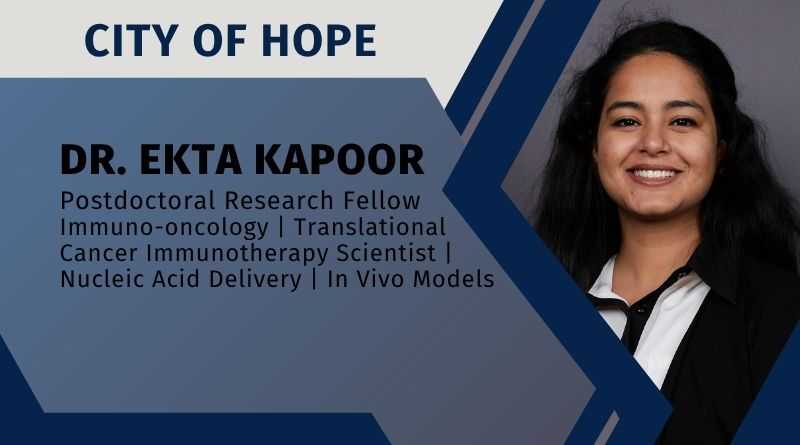
By Dr. Ekta Kapoor, Postdoctoral Research Fellow, City of Hope
Immunotherapy has redefined the therapeutic landscape of oncology by enabling the immune system to recognize and eliminate malignant cells. Over the past decade, immune checkpoint inhibitors targeting PD-1/PD-L1 and CTLA-4 have delivered durable clinical responses in malignancies such as melanoma and non-small cell lung cancer, while adoptive cell therapies, including CAR-T cells, have achieved high remission rates in certain hematologic cancers. These advances establish a central principle: when appropriately engaged, the immune system can exert sustained antitumor activity.
Yet, these responses remain heterogeneous. A substantial fraction of patients derives limited or no benefit, and resistance mechanisms frequently emerge. This variability reflects the underlying complexity of tumor-immune interactions. It underscores a key bottleneck in immunotherapy: the identification of actionable targets and predictive biomarkers that can guide therapeutic design and patient selection.
AI is transitioning from a data-processing tool to a central driver of conceptual and translational innovation in immunotherapy.
Tumors are embedded within a highly structured and dynamic tumor microenvironment (TME), composed of immune, stromal, and vascular elements that collectively regulate immune function. Immunosuppressive populations, including regulatory T cells (Tregs), tumor-associated macrophages (TAMs), and myeloid-derived suppressor cells (MDSCs), can attenuate cytotoxic responses, while stromal components may impose physical and biochemical barriers to immune infiltration. Advances in single-cell sequencing and spatial transcriptomics have enabled high resolution mapping of these ecosystems, revealing extensive cellular heterogeneity and context dependent signaling networks. However, the scale and dimensionality of these datasets exceed the capacity of conventional analytical frameworks.
Artificial intelligence (AI) is increasingly positioned as a critical interface between complex biological data and therapeutic innovation. By enabling the integration and interrogation of large-scale, multimodal datasets, AI is accelerating multiple stages of immunotherapy discovery.
A primary application lies in target and biomarker identification. Machine learning models trained on datasets such as The Cancer Genome Atlas (TCGA) have identified genomic and transcriptomic correlates of immunotherapy response. For instance, tumor mutational burden (TMB) has emerged as a predictive biomarker for checkpoint blockade in several cancers, informed in part by computational analyses linking mutational load to neoantigen presentation. In parallel, AI-driven neoantigen prediction pipelines are now being used to design personalized cancer vaccines, with early clinical studies in melanoma demonstrating the feasibility of eliciting patient-specific T cell responses against predicted epitopes.
AI is also transforming therapeutic design. Structure prediction algorithms, exemplified by deep learning systems such as AlphaFold, have enabled accurate modeling of protein conformations, facilitating rational design of antibodies and engineered proteins targeting immune pathways. In practical terms, this allows in silico screening of candidate molecules for binding affinity and specificity prior to experimental validation. Similarly, generative models are being applied to optimize chimeric antigen receptor (CAR) constructs, improving antigen recognition while reducing off-target toxicity, an important consideration in next-generation cell therapies.
Beyond individual targets, AI is providing new insight into the systems-level organization of the tumor microenvironment. Integration of single-cell and spatial omics data using machine learning has revealed spatially resolved immune niches associated with response or resistance. For example, the co-localization of regulatory T cells with tumor cells has been linked to immune suppression, while distinct fibroblast subpopulations have been implicated in excluding T cell infiltration in solid tumors such as pancreatic cancer. These findings are informing combination strategies that simultaneously target immune and stromal compartments.
In clinical development, AI is addressing one of the most persistent challenges in oncology: patient stratification. Predictive models that integrate genomic alterations, gene expression signatures, and protein-level biomarkers are improving the identification of patients likely to respond to specific immunotherapies. For example, AI-based classifiers combining immune gene signatures, TMB, and PD-L1 expression have shown better predictive performance in non-small cell lung cancer than single biomarkers alone. Concurrently, deep learning approaches applied to digital pathology are enabling quantitative assessment of immune infiltration and spatial architecture within tumors, providing additional layers of clinically actionable information.
AI is also reshaping clinical trial design and execution. Adaptive trial frameworks, supported by real-time data analysis, allow dynamic modification of study parameters based on early efficacy signals. Moreover, biomarker-driven “basket trials,” which enroll patients based on molecular features rather than tumor histology, increasingly rely on AI-derived insights to define inclusion criteria. These approaches enhance trial efficiency and may reduce the high attrition rates traditionally associated with oncology drug development.
Collectively, these applications are compressing timelines across the drug development pipeline. AI shortens the time and expense of delivering new immunotherapies to the clinic by optimizing therapeutic candidates in silico, prioritizing high-probability targets, and improving patient selection.
However, the integration of AI into immuno-oncology is not without constraints. Model performance is contingent on the quality, diversity, and standardization of input data. Systematic biases in training datasets can limit generalizability, particularly across underrepresented populations. In addition, the interpretability of complex models remains a challenge, necessitating the development of explainable AI frameworks to support clinical decision-making. Importantly, computational predictions must be rigorously validated through experimental and clinical studies to ensure biological and translational relevance.
Ongoing efforts to address these challenges include the establishment of standardized data infrastructures, improved model transparency, and interdisciplinary collaboration between computational scientists, biologists, and clinicians. Regulatory bodies are also adapting to accommodate AI-driven methodologies, with increasing emphasis on reproducibility and validation.
In the future, it is anticipated that the convergence of AI with multi-omics profiling, long-term patient monitoring, and actual clinical data would improve our comprehension of tumor-immune dynamics. These advances may enable the development of truly personalized immunotherapies, including individualized neoantigen vaccines and adaptive cell therapies tailored to the molecular and immunological features of each patient’s tumor.
In this evolving landscape, AI is not merely a tool for data analysis but a driver of conceptual and translational progress. By bridging the gap between complex biological data and therapeutic innovation, it is redefining the pathway from data to drugs and accelerating the realization of precision immuno-oncology.